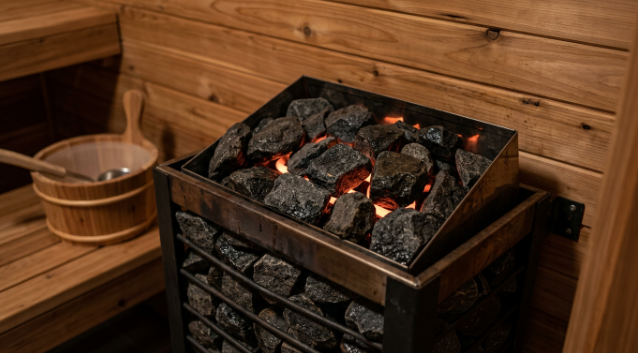
A sauna heater and the wood around it need different cleaning approaches: the heater gets a dry brush on the rocks and a damp cloth on the cooled, unplugged housing, while the surrounding wood gets plain water, a soft brush, and nothing oil-based or chemically scented. Mixing the two, spraying cleaner near the heater or letting standing water sit on cedar benches, is the fastest way to shorten the life of both the unit and the wood around it.
How Do You Clean the Rocks Without Damaging the Heater?
Rocks collect dust and, over time, a chalky white mineral crust from hard water poured over them session after session. With the heater fully cooled and unplugged, a soft brush or a handheld vacuum with a narrow attachment lifts loose debris from between the stones without disturbing their arrangement, which matters for even heat distribution. Rocks with visible cracks, chips, or a heavy crust that will not brush away should be pulled and replaced rather than aggressively scrubbed, since forcing a stubborn stone back into place can shift the whole bed and change how air moves through it.
Can You Just Spray the Heater Down Like Other Appliances?
No, and this is the single most common mistake on a budget build where owners treat the heater like a kitchen appliance. Liquid cleaner sprayed near the control box, vents, or wiring risks both damaging internal components and creating a shock hazard the next time the unit is powered on. The housing exterior can be wiped with a cloth that has been dampened and then well wrung out, never soaked, and only after the heater has fully cooled and is unplugged at the source. Anything beyond that light exterior wipe belongs to a qualified technician, not a routine cleaning task.
What Cleans Sauna Wood Without Wrecking the Finish?
Cedar, spruce, and heat-treated hemlock are typically left unfinished inside a sauna specifically because oils, varnishes, and standard household cleaners can reactivate under heat and release fumes at typical sauna temperatures. Plain water with a soft-bristle brush handles most everyday grime, and a cleaner explicitly labeled safe for sauna or spa wood is the next step up for more stubborn spots. Standard multi-surface cleaners, even ones marketed as wood-safe for furniture, are formulated for room-temperature use and are not the same product, regardless of similar packaging.
How Do You Get Rid of White Mineral Stains Near the Heater?
The pale, chalky marks that build up on wood near the rocks come from mineral deposits in tap water. A cloth dampened with plain water and a small amount of white vinegar, diluted well below full strength, lifts most of this buildup without harming the wood, provided the area is dried fully afterward rather than left damp. Vinegar should never be applied directly to the heater itself or poured over the rocks as a cleaning shortcut, since it can corrode metal components the same water exposure was never designed to touch.
How Often Does This Actually Need to Happen?
A quick brush of the rocks and a wipe of the visible wood near the heater every few weeks of regular use keeps buildup from becoming a bigger job. A deeper check, cracked rocks pulled, mineral crust addressed, and the housing wiped down, fits well on a seasonal schedule, roughly every three to four months for a heater used several times a week. Rock replacement itself typically comes around once a year for frequent users, sooner in areas with especially hard water. Retailers that sell heaters in this price range often list rock replacement kits alongside the units themselves, and it is worth checking the SweatDecks sauna heaters collection for compatible rock sizing before assuming any bag of landscaping stone will do the job.
Why Does the Heater Smell Odd the First Session After Cleaning?
A faint dusty or slightly metallic smell in the first few minutes after a cleaning session is normal and usually comes from residual moisture or fine dust burning off the rocks and heating element as the unit comes back up to temperature. It should fade within ten to fifteen minutes and not return in later sessions. A smell that persists, smells sharply chemical, or comes back every session is a different problem and usually traces back to cleaner residue that was not fully wiped away, water that reached the housing during cleaning, or, less commonly, a wiring issue that has nothing to do with cleaning at all. Running the heater empty for a few minutes with the door open before the first post-cleaning session is a simple way to clear normal residue before anyone sits down for a full session.
What Does the Research Say About the Sessions This Maintenance Protects?
None of this cleaning routine changes the underlying case for owning a sauna, which rests on the heat exposure itself rather than the equipment’s appearance. A review in the American Journal of Physiology described the body’s physiological response to repeated heat exposure, the kind that depends on a heater and rock bed working correctly session after session. A 2018 review in the American Journal of Medicine outlined associations and recognized risks tied to regular sauna bathing. A systematic review in Evidence-Based Complementary and Alternative Medicine reported similar associations across a range of dry sauna studies. Keeping a heater and its surrounding wood in good condition is what keeps a household actually using it consistently enough for any of these associations to be relevant.
Frequently Asked Questions
Can you spray water or cleaner directly on a sauna heater? No. Spraying liquid onto the housing or electrical components risks damage and a shock hazard. Clean with a dry brush on the rocks and a damp, well-wrung cloth on the cooled, unplugged exterior only.
How often should sauna rocks be cleaned or replaced? Check every six to twelve months for cracks, chips, or mineral crust, and replace damaged stones. A full swap is typically needed every one to three years.
What should never be used to clean the wood around a sauna heater? Avoid oil-based finishes, varnish, paint, or chemical household cleaners. Heat can reactivate these coatings. Plain water and a soft brush are the standard choice.
How do you remove white mineral buildup near a sauna heater? Wipe with a cloth dampened in water and diluted white vinegar, then dry the area fully. Never apply vinegar directly to the heater or rocks.
Is it safe to vacuum dust out of a sauna heater’s rock bed? Yes, with the heater cooled and unplugged. A handheld vacuum with a narrow attachment lifts dust without disturbing the rock arrangement.
References
- Effects of heat and cold on health, with special reference to Finnish sauna bathing, American Journal of Physiology, 2018
- Benefits and risks of sauna bathing, The American Journal of Medicine, 2001
- Clinical Effects of Regular Dry Sauna Bathing: A Systematic Review, Evidence-Based Complementary and Alternative Medicine, 2018
By Colin Whitfield
